Sinéad O’Connor was popular for her confidential battles, provocative activities and her wild and expressive music.
Sinéad O’Connor, the skilled Irish vocalist lyricist who turned into a genius in her mid-20s and was known as much for her confidential battles and provocative activities concerning her wild and expressive music, has passed on at 56
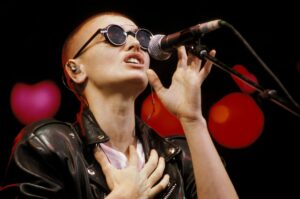

“It is with incredible trouble that we declare the death of our adored Sinéad. Her loved ones are crushed and have mentioned protection at this truly challenging time,” the vocalist’s family said in a proclamation detailed Wednesday by the BBC and RTE. No reason was revealed.
Kareena Kapoor remembers Sinéad O’Connor
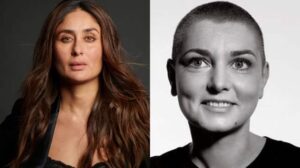

Kareena Kapoor also shared a news article about her death on her Instagram Stories and wrote, “Nothing compares to you…you Legend.”
Filmmaker Shekhar Kapoor too wrote on Twitter, “Tragic passing of one of the most talented pop singers #SineadOConnor .. a troubled life, she was unafraid to bring her pain to her songs. Making her one of the most powerful and moving singers of her generation.”
She was public about her mental illness, saying that she was diagnosed with bipolar disorder. O’Connor posted a Facebook video in 2017 from a New Jersey motel where she had been living, saying that she was staying alive for the sake of others and that if it were up to her, she’d be “gone.”
Whenever her adolescent child Shane passed on by self destruction last year, O’Connor tweeted there was “no good reason for living without him” and she was before long hospitalized. Her last tweet, sent July 17, read: “For all moms of Suicided kids,” and connected to a Tibetan empathy mantra.
Conspicuous by her shaved head and with a multi-octave mezzo soprano of exceptional close to home reach, O’Connor started her profession singing in the city of Dublin and before long rose to global notoriety.
She was a star from her 1987 presentation collection, The Lion and the Cobra, and turned into a sensation in 1990 with her front of Ruler’s song Nothing Looks at 2 U, a fuming, breaking execution that bested diagrams from Europe to Australia and was elevated by a limited time video highlighting the dim peered toward O’Connor in extraordinary close-up.
Why she had shaved her head
She was a long lasting non-traditionalist — she said she shaved her head in light of record leaders constraining her to be customarily captivating — however her political and social positions and upset private life frequently eclipsed her music.
A pundit of the Roman Catholic Church a long time before claims of sexual maltreatment were generally revealed, O’Connor stood out as truly newsworthy in October 1992 when she destroyed a photograph of Pope John Paul II while showing up on NBC’s Saturday Night Live and reproved the congregation as the foe.
The following week, Joe Pesci facilitated Saturday Night Live, held up a fixed photograph of the Pope and said in the event that he had been on the show with O’Connor he “would have gave her such a smack.” Days after the fact, she showed up at a top pick recognition for Bounce Dylan at Madison Square Nursery and was promptly booed. She should sing Dylan’s I Have confidence in You, however changed to a cappella form of Sway Marley’s Conflict, which she had sung on Saturday Night Live.
Despite the fact that supported and empowered in front of an audience by her companion Kris Kristofferson, she left and separated, and her presentation was kept off the show Disc. (Years after the fact, Kristofferson recorded Sister Sinead, for which he stated, “And perhaps she’s insane and perhaps she ain’t/Yet so was Picasso as were the holy people.”)
She likewise quarreled with Honest Sinatra over her refusal to permit the playing of The Star-Radiant Flag at one of her shows and blamed Sovereign for genuinely undermining her. In 1989 she proclaimed her help for the Irish Conservative Armed force, an assertion she withdrew a year after the fact. Around a similar time, she skirted the Grammy service, it was excessively marketed to say it.
In 1999, O’Connor created ruckus in Ireland when she turned into a priestess of the breakaway Latin Tridentine Church — a place that was not perceived by the standard Catholic Church. For a long time, she required a full examination concerning the degree of the congregation’s job in covering youngster maltreatment by pastorate. In 2010, when Pope Benedict XVI apologized to Ireland to make up for quite a long time of misuse, O’Connor denounced the conciliatory sentiment for not going sufficiently far and called for Catholics to blacklist Mass until there was a full examination concerning the Vatican’s job.
Individuals expected I didn’t put stock in God. That is not the situation by any means. I’m Catholic by birth and culture and would be the first at the congregation entryway assuming that the Vatican offered genuine compromise,” she wrote in the Washington Post in 2010.
O’Connor reported in 2018 that she had switched over completely to Islam and would embrace the name Shuhada’ Davitt, later Shuhada Sadaqat — in spite of the fact that she kept on utilizing Sinéad O’Connor expertly.
“Her music was cherished all over the planet and her ability was unequaled and outstanding,” Irish State head Leo Varadkar said in a proclamation via virtual entertainment.
More about Sinéad O’Connor
O’Connor was brought into the world on Dec. 8, 1966. She had a troublesome youth, with a mother she claimed was oppressive and urged her to shoplift. As a teen she invested energy in a congregation supported establishment for young ladies, where she said she washed clerics’ garments for no wages. Be that as it may, a religious woman gave O’Connor her most memorable guitar, and soon she sang and performed in the city of Dublin, her persuasions going from Dylan to Siouxsie and the Banshees.
Her performance with a nearby band grabbed the attention of a little record mark, and, in 1987, O’Connor delivered, The Lion and the Cobra, which sold a huge number of duplicates and highlighted the hit Mandinka, driven by a hard-rock guitar riff and O’Connor’s piercing vocals. O’Connor, then 20 and pregnant, co-created the collection.
“I guess I must say that music saved me,” she said in a meeting with the Autonomous paper in 2013. “I had no different capacities, and there was no learning support for young ladies like me, not in Ireland around then. It was either prison or music. I lucked out.”
Nothing Thinks about 2 U got three Grammy selections and was the highlighted track on her acclaimed collection, I Don’t Need What I Haven’t Got, which aided lead Drifter to name her Craftsman of the Year in 1991. “She demonstrated that a recording craftsman could decline to think twice about still interface with a huge number of audience members hungry for music of substance,” the magazine proclaimed.
O’Connor’s other musical credits included the albums, “Universal Mother” and “Faith and Courage,” a cover of Cole Porter’s “You Do Something to Me,” from the AIDS fundraising album “Red Hot Blue,” and backing vocals on Peter Gabriel’s “Blood of Eden.” She received eight Grammy nominations and in 1991 won for best alternative musical performance.
O’Connor announced she was retiring from music in 2003, but continued to record new material. Her most recent album was I’m Not Bossy, I’m the Boss, released in 2014 and she sang the theme song for Season 7 of Outlander.
The singer married four times; her union to drug counsellor Barry Herridge, in 2011, lasted just 16 days. O’Connor had four children: Jake, with her husband John Reynolds; Roisin, with John Waters; Shane, with Donal Lunny; and Yeshua Bonadio, with Frank Bonadio.
In 2014, she said she was joining the Irish patriot Sinn Fein party and required its chiefs to move to one side so a more youthful age of activists could dominate. She later pulled out her application. “Ireland has lost one of our most remarkable and effective vocalist lyricist and female specialists,” Sinn Fein VP Michelle O’Neill said.